

I value my skills, judgment, integrity, and the ability to work with people. These are the attributes that helped me attain success, I must say. It’s easy to look back and say, “I worked hard and built a business because of these qualities.” But, is that all? Luck, of course. That still leaves out a pretty important part of the story: people who put their confidence in me, sometimes before I had much to show. A casual mention of the word godfathers by a friend last week made me think of my own godfathers. In the startup world, a godfather is not a powerful patron who protects you and advocates for you in return for loyalty, but someone who puts his/her reputation at stake to support your cause. I can unashamedly admit that some of the biggest opportunities in my life began with someone else dropping my name at the right place, at the right time. Was I lucky in being discovered by the right people? The answer is no. I cultivated habits that made me visible in rooms where godfathers are most likely to be found.
My ‘unsung heroes’
I am generally surrounded by smart people trying to figure out how to get ahead. Usually, their conversations with me are about what else they should learn, build, or get better at. I understand that drive in them. But when I look at my own life, I conclude that nothing of what I learnt or did would have mattered had someone not given me a chance. In fact, some of my biggest opportunities materialized because of my “unsung heroes”. Before Kalaari Capital wrote us our Series A cheque, they called Mayuresh Sanjagiri at Bajaj Finserv. Years later, when CRED was considering acquiring us, people spoke to our investors, clients, and former colleagues. Mayuresh was someone they spoke to again. I wasn’t part of those conversations, but they still worked in my favour. Therefore, my advice to any ambitious youngster is to build relationships that work even when you are not in the room.
The film The Godfather immortalized the word, and is supposed to be a warning for a career built on patronage, dependency and moral compromise, but in the corporate world the word carries weight where competence and trust matter the most.
Building relationships with the right kind of people who would vouch for you, who would recommend you, risking their own reputation, is probably one of the highest-leverage moves one can make.
When advice is not enough
Think of your support structure as a pyramid. At the bottom are the gyaan gurus - the Instagram advice and generic LinkedIn posts. Some of it might be useful, but these people don’t know you or your situation. Then you have coaches and mentors. They might have seen you work in your field or an adjacent one. You can bounce ideas off them, learn from their experience, and have them question your thinking. Sometimes they help with a specific decision. Sometimes they change how you see things.
At the top is someone who takes that relationship a step further: an advocate, a sponsor, a godfather. They don’t just help you prepare for an opportunity. They recommend you for the role, introduce you to a client, or put your name forward for a responsibility you haven’t held before. Their reputation is involved in your fate. Which means they have real skin in the game. A mentor might help you figure out whether you’re ready. A sponsor is willing to tell someone else, “I think you should give this person a chance.”
When COVID hit, we were a B2B SaaS company with a sixty-day payment cycle. Clients were renegotiating contracts or cancelling them. Even some large banks went back on the commercials we had agreed on. Salaries still had to be paid. Anshul Kheterpal, who was CFO at FreeCharge then, did the opposite. He paid us in advance. He trusted us to deliver, and that payment allowed me to cover three months of salaries. Anshul had already been a sounding board as I worked through startup problems. He didn’t just help me think through the situation, but made a decision that gave us time to keep going. I’m eternally grateful to him.
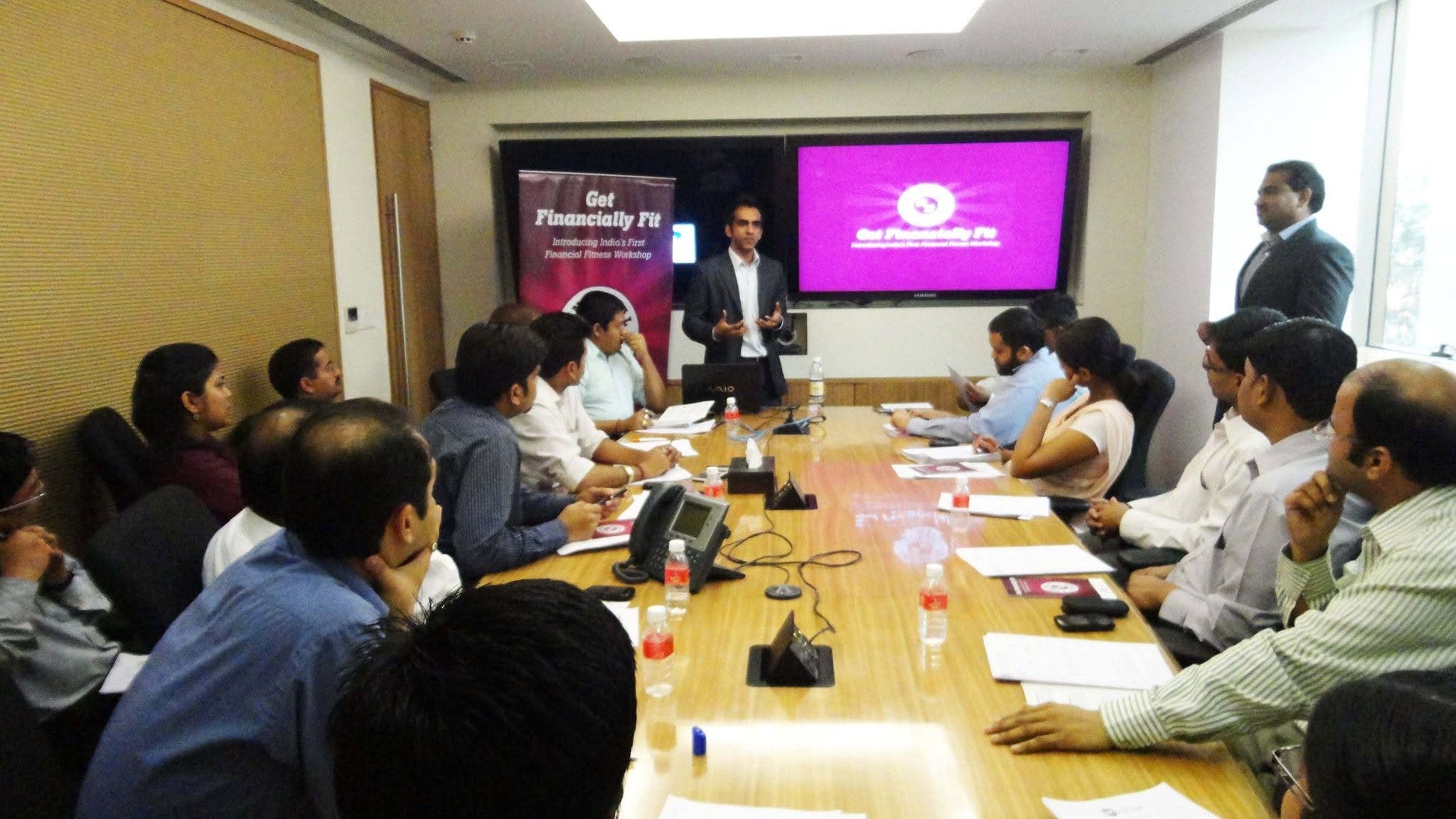
Years before that, Mayuresh and Diwakar had come to our office. The office was literally my bedroom. There were no employees and no working prototype to show. They still backed us to deliver our first financial fitness report. That work became a steady source of cash flow for CreditVidya. So when Mayuresh was called years later, he wasn’t judging us from a presentation. He had seen where we started and what happened after we were given a chance.
Around the CRED acquisition, I also heard that one person had said he would give me his personal money to build something again. I still don’t know who said it. I share that out of gratitude, not because I think it makes me sound impressive. Someone who had seen the business up close was willing to back me again. That meant a lot. In each of these cases someone went beyond just advising. They put their own reputation at stake.
Become a good ‘god-son’
Most human relationships involve some form of reciprocity. If we want someone’s time, advice, introductions, or backing, what would they want from us in return? If they’re going to put their name behind someone, they need a reason to feel good about that decision. For me, that meant being willing to learn, communicating well, following through, and showing gratitude when someone took time out to help. It did not mean agreeing with everything they said, but taking their advice seriously.
One habit I developed early in my career was that of having “social Fridays.” I tried to finish my work between Monday and Thursday, and reserved Friday for meeting people in other departments, asking what they were working on, and sharing ideas. I had another rule: send a thank-you note within twenty-four hours of meeting someone. Sometimes I’d send a book I thought they would like. They had taken time to help me, and I wanted them to know I appreciated it. I didn’t want to be someone who asked for advice and then disappeared. I carried the rule into CreditVidya & Prefr. It was our gospel for the sales team and it was non-negotiable.
Though I was extremely grateful to seniors, clients and investors, I was mindful of not agreeing to everything. I asked questions and pushed back when something didn’t make sense to me. I could respect someone’s experience without assuming they were right about every decision. I still had to think for myself and take responsibility for what I did. Vinod Khosla recently said he sometimes argues for positions he doesn’t believe in to see whether founders push back or just agree. “The ones who cave in are not the ones I back,” he said. Being willing to learn isn’t the same as doing whatever an experienced person tells you.
I don’t know exactly what made each person decide to back me, but they had spent time with me and seen me work. They knew more than what was on my résumé. They didn’t know whether I would succeed at the next thing, but they had some reason to believe I could.
You can be unfinished and still be worth backing
People generally hesitate to initiate a conversation with someone who can mentor them, fearing being judged as an opportunist. However, the worry isn’t justified because learning to hear a no is part of the growth process. The doubts can be many. Why would someone back me? I haven’t done enough yet. Let me get more experience, deliver something bigger, become someone worth recommending. These seem to be reasonable justifications for not acting. What they don’t see is that you want to earn the opportunity, not ask someone to take a chance they might regret.
The problem is that there’s always another thing you could do to become more ready. Another course, another project, another year of experience. Working on yourself can feel safer than letting someone judge you. You can keep preparing without having to hear, “I’m not sure I’d recommend you.” It’s called the meritocracy trap, which makes you believe that hard work alone will take you through. So you keep improving your ability without giving the right people much chance to know it.
Think about how Sachin Tendulkar came to recommend MS Dhoni for India’s captaincy. Sachin said he used to stand in the slips and discuss the game with Dhoni: what he was seeing, the field placements, what they could do next. Those conversations helped Sachin judge how Dhoni read the game. The recommendation was a judgment about potential, not a guarantee about the outcome. Dhoni was already an accomplished international player. But he hadn’t yet built the India captaincy record we associate with him now. Sachin was recommending him for what he believed he could do next, based on qualities he had already observed. He needed a reason to believe Dhoni could handle it. Their conversations gave him something to go on.
I think about that when I remember John Edwards giving me a chance on Wall Street without experience there. Someone had to be willing to consider what I might do, not only what I had already done.
So perhaps building these relationships deserves some of the effort we put into becoming better. And it’s not about chasing powerful people or asking strangers to believe in us. Working with people, asking questions, sharing our thinking, and taking responsibility lays the groundwork for someone to say, “I think this person can do more.” True advocacy requires deep, one-on-one trust and mutual understanding, not surface-level visibility. A vast network of shallow contacts holds little value. The quality and depth of trust exponentially outweigh the quantity of connections.
You don’t need everyone to believe you’re ready. And you don’t need to pretend you have no gaps. But if you stay behind the door until you feel completely qualified, people may never get to see enough to back you. Their confidence doesn’t have to wait for your finished résumé. It does need somewhere to begin.
Building a relationship is also ‘work in progress’
A SilkRoad analysis covering more than 14 million applications and 329,000 hires across participating companies found that employee referrals accounted for more than 30% of hires.
Yet when we think about getting ahead, we focus only on skills, hard work, a better pitch, but not how to make it all visible. What interests me about Silicon Valley is how people back each other in that ecosystem - through introductions, recommendations, and speaking up if a promising idea comes along.
Meanwhile, it’s easy to spend another evening behind a laptop, fixing the wording of an email, polishing code, or getting a marketing presentation just right. I know that instinct. There’s always something else to improve. Building a relationship is not that straightforward, and nobody gives you a deadline for it. So it gets pushed back. We make time to improve our work, but not always for people to get to know the person doing it. Spending time with people, understanding their work, and letting them get to know ours is part of work too. Looking back, I’m glad people got to know me before I had much to show. Otherwise, they might never have had a reason to give me the opportunities that helped me build something worth showing.
A first “loan” of opportunity often needs a signature from someone the bank already trusts. Advice is free to give; a signature is not. Your benefactors lose something if you fail, so they sign only for people whose work and character they have seen up close. So yes, keep getting better. But don’t spend all your time becoming someone people could believe in while giving them no chance to know you. Some of your next opportunities may begin with a conversation you’ll never hear. Make time for the relationships that could lead to it. Make room for a godfather.